Behind Every Crease
How Each Crease Reveals the Drawing
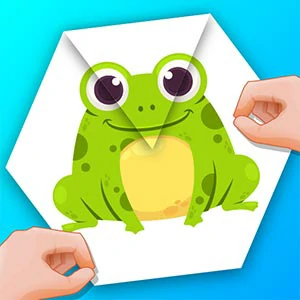
Paper Fold lays a picture over a sheet that begins folded, and your only input is choosing which side gets creased next. Each crease flips one panel of the artwork away and brings a different panel forward, so the same sheet can develop along different routes depending on the order you pick. The level clears when every piece settles into the finished drawing. Attempts stay brief, and taking back one crease is enough to correct most wrong turns.
Let the Order Be Your Guide
Every crease changes what you see, so the order matters far more than speed. Look for the panel that belongs in the finished drawing, fold toward it first, then let each next crease follow from the piece now in view. Early levels line their panels up in a numbered order that is easy to follow, which makes the opening boards a good place to learn how one flip changes the next step of the sequence.
Crease Toward What You Can Still See
A fold always hides part of the artwork while it reveals another part, so the panels still in view are your safest anchor. Work from those visible pieces, folding in their direction, and every move follows naturally from the last one. When you can predict what the next crease will hide, the picture builds without surprises. That one habit turns a level that looks scrambled into a steady run of simple, readable folds.
Cancel only the crease that caused the tangle
Most dead ends start with one early fold aimed at the wrong panel, and the fix is to take back just that crease instead of replaying the whole level. The sheet goes back to the moment before your last choice, so a single correction lets you try the other side while the rest of the progress stays. Treat the mistake as a hint that this side comes later in the order, and the drawing usually completes from there.
The Order Behind the Art
Is one mistaken fold fixable after all?
Yes, and you usually only need one step back. Take back your most recent crease, try the opposite side, and the rest of the level stays as it was. A wrong fold costs no penalty beyond the few seconds it takes to correct, so it is worth experimenting on any panel you are unsure about.
Do different fold sequences give different pictures?
It does, and that is the heart of the level. Each crease swaps which panels are hidden and which stay visible, so two different orders can arrange the same sheet very differently. The drawing only aligns when every piece lands where the finished picture needs it, which is exactly the sequence you are solving with each fold.
What is on the menu behind the loading bar?
After the loading bar reaches the end, the menu shows a LV1 entry with a START button, a Music toggle, and a Special level option. The numbered level entry makes returning to a favorite board easy, and the Music switch lets you play quietly. Everything needed for a session sits on that single screen.
How long does the loading screen take?
The page shows a loading progress bar before the menu appears, so give the sheet a moment on the first visit. Once the bar completes, the LV1 menu and its START button are ready to use. Later visits run faster because the folded-paper assets are already cached by the browser, and the menu appears almost immediately.
What is the Special level option?
The menu lists a Special level entry alongside the numbered LV1 boards, which marks content that sits outside the ordinary order. Treat it as a bonus challenge rather than the next step in the line, and come back to the numbered list whenever you want the simpler route. The option is visible from the menu, but the numbered boards remain the clearest way through the game.