Draw Release Protect
Sketching the Barrier That Keeps the Dog Safe
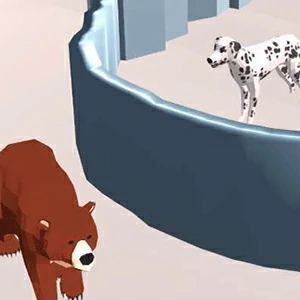
Protect The Dog 3D turns one hand-drawn line into the only thing standing between a dog and an oncoming hazard. You sketch a barrier, release it, and the scene's physics takes over from there. A round ends on a YOU LOST! screen when the line fails to hold, so each level is a short read-then-draw test: find where the danger comes from, draw one compact shape on that side, and let it do its job.
Anchor Both Ends of the Sketch First
A barrier that floats in open space slides or tips the moment the hazard hits it. End your line on the floor, against a wall, or on another sturdy surface so the sketch has nothing to shift on. When both ends sit on firm support, the same shape holds much longer because the physics has no weak spot to catch. Check the two ends before you release, since a line with one loose end falls almost as quickly as one hanging in mid-air.
Cover the threatened side only
The dog needs cover on just the one side where the threat approaches, so circling the whole scene wastes your line and leaves long unsupported stretches. Aim the sketch at the incoming risk and keep it as small as the level allows. A compact barrier on the exposed side is easier for the physics to hold steady, and it leaves more room to watch what happens next. Most rounds only need one short wall.
Wait for the Barrier to Settle
The sketch keeps moving after the level starts, so what you drew is not where it ends up. Let the line come to rest and look at its actual resting place before you judge anything. The shape that counts is the one that survives the physics, not the one that looked right while your finger or mouse was still down. Most levels read clearly once everything stops moving, so hold off on redrawing until the scene has finished.
Keep the Sketch Small and Well Braced
When a barrier fails, resist redrawing the same shape at a bigger size, since longer strokes usually make it weaker. Shorten the line, place it close to the dog, and rest both ends on solid support. A compact barrier lasts far longer than a grand loop because there is less unsupported length for the physics to grab. Start small, watch how it behaves, then extend the design only if the risk arrives from somewhere new.
Use Each Loss Screen as Your Next Read
Every failed round drops back to a YOU LOST! screen, and that message is useful feedback. Note where the line gave way and whether the sketch was under-supported or aimed at the wrong side, then redraw with one change instead of a whole new shape. Short retry loops teach the physics quickly. Watch the first scene twice, draw once, and let the result tell you what to fix.
Questions About Shielding the Dog
Why does my barrier tip over after I release it?
Once the line is released it belongs to the scene, so any part without support slides or topples when the hazard makes contact. Rest both ends of the sketch on the floor or a wall and keep the line short. Loops with no anchor are the first to fold, while a small, well-supported shape stays put.
Can the wall cover just one side?
It can, when the danger approaches from one direction and that wall blocks it. Check the exposed side before releasing the barrier. Wrapping the whole scene creates long fragile stretches, and a long line is harder for the physics to hold. Find the exposed side, match the sketch to it, and keep the drawing compact.
What happens when the hazard reaches the dog?
The round ends on a YOU LOST! screen when the line gives way, and the next attempt starts with the same scene. Treat that message as a hint: see where the barrier failed, decide whether it was too short or too loosely anchored, and redraw. One small change is usually enough to turn the round around.
Is a bigger barrier ever the right call?
Rarely. Long strokes create long unsupported spans, which is exactly what the physics likes to push over. A compact line stays near the dog, anchors easily, and keeps the next read clear. If a small shape fails, adjust its position or angle before you think about scaling it up.