Touch-and-drag dunking
Steering the ball with your finger
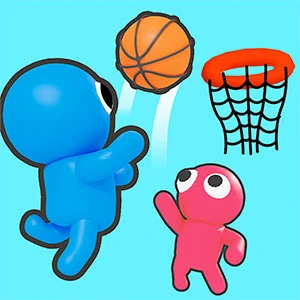
Bouncy Dunks is a one-touch rally game: the ball keeps bouncing and your finger steers the play. Touch the ball and drag to move it, then release at the right moment so the rebound travels toward the hoop. The drag is the only input - there is no separate direction pad - so the gesture carries both aim and timing. Keep the chain of makes alive and the score climbs with every basket you land in a row.
Drag the ball across the court
Your finger is the only control. Touch the ball wherever it is and drag it along the floor until the direction looks right, then let go, because the release sends the ball on its way and the bounce carries it toward the opposite end. The drag sets both the aim and the distance: a short pull nudges the ball, while a longer sweep covers more court. Start every throw by deciding where the rebound should land.
Time your step to the peak
The ball never stops moving, so the moment you touch it decides what the drag can do. Meet the ball while it still has height, when a small pull can redirect the whole rebound, and avoid grabbing it low and falling, when the drag fights the drop instead of using it. Watch the arc after each basket and start the next touch as the ball begins to rise. The rebound is the teacher, and it points the next throw before the ball even lands.
Keep the chain alive basket by basket
Every basket adds to the chain, and the run continues only while the makes keep coming. Treat each scored hoop as the starting line for the next drag rather than a pause, because the ball comes back to you quickly and the next touch should begin with the same rhythm. While the chain is active, one basket feeds the next and the score builds in longer and longer streaks. A calm, repeating loop is the whole point of the run.
Settle back in after a miss
A miss ends the current chain, and the fastest recovery is a clean restart instead of frantic touching. Watch the ball settle into its usual bounce and make one deliberate drag aimed at the middle of the hoop. The score keeps counting even after a break, so there is no need to force the next basket in a hurry. Two steady touches after a miss rebuild the rhythm faster than five rushed ones.
Dunking questions for a long chain
Who moves, me or the ball?
Touch the ball and drag to move it - that is the whole input. There is no arrow key and no separate direction control; the drag sets where the ball travels, and releasing lets the rebound fly. Start each throw by placing the ball where you want it, then let the bounce do the rest of the work.
When should I touch the ball?
Meet the ball while it still has air under it, because a drag at that point can steer the entire rebound. Waiting until the ball is low and falling leaves the touch fighting the drop instead of using it. As the ball begins to rise again, that is the moment to reach out and set the next direction.
Why does the ball keep bouncing past the hoop?
The ball usually flies past when the drag is released too late or aimed too wide. Release the touch while the direction is still clear, and point the rebound at the middle of the hoop rather than the edge. A late release leaves the ball already committed to a path that the rim can only miss.
Is there anything to do after a missed basket?
A miss simply ends the current chain and the run starts over from the same lively bounce. Let the ball settle, make one calm drag toward the hoop, and restart the chain with the same touch. The score keeps counting, so a fresh, unhurried start is worth more than forcing the next basket in a hurry.